Living Room Lighting: Balancing Ambience and Functionality
Living room lighting: balancing ambience and functionality
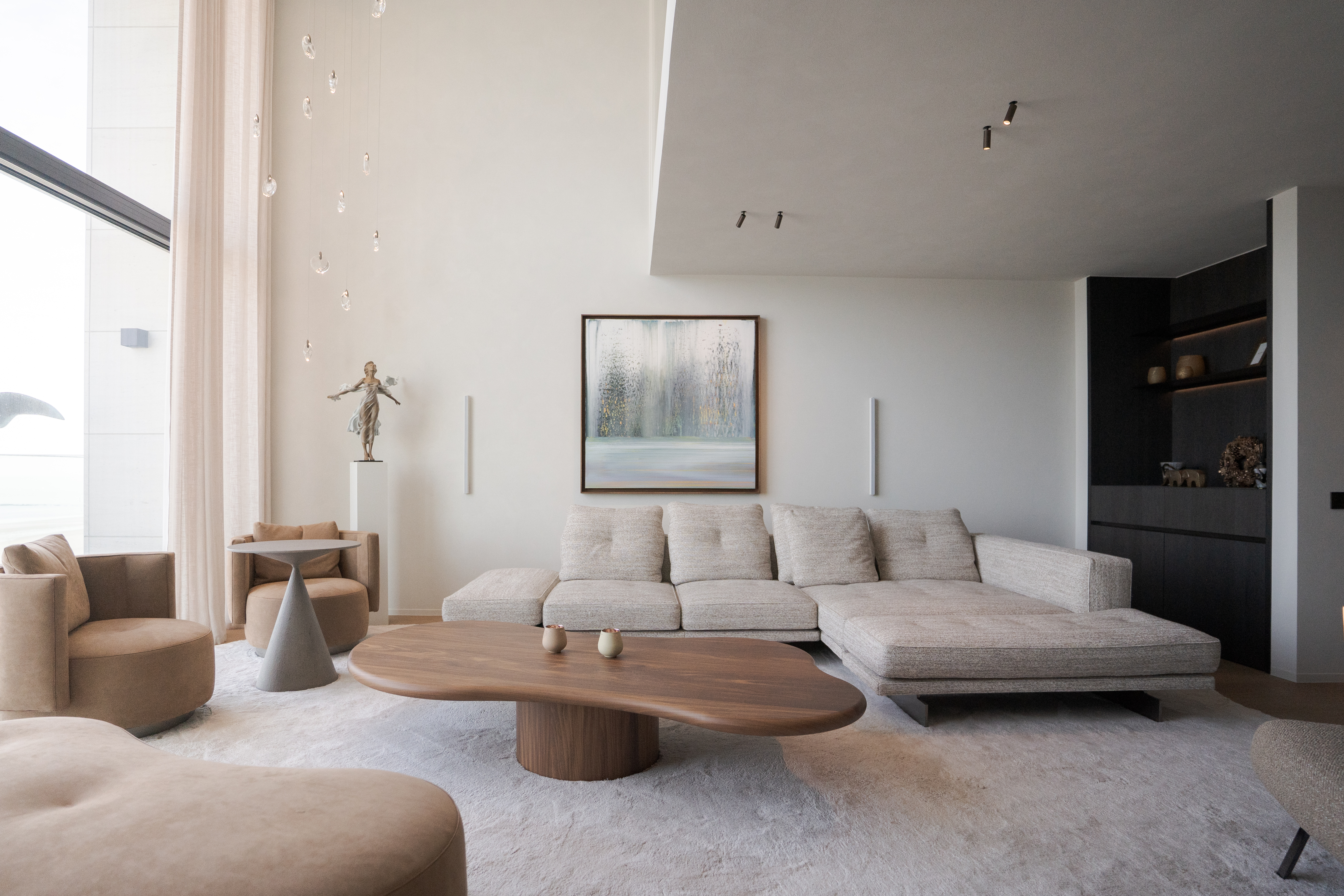
The living room is often the heart of the home. It is a place to relax, welcome guests and spend time with family. The right lighting therefore plays an important role. A well-designed lighting plan not only provides sufficient illumination, but also adds atmosphere, depth and character to the interior.
A tailored lighting plan for your living room
Good living room lighting starts with the architecture and layout of the space. The position of the sofa, artwork, bespoke furniture, curtains and passageways determines where light is needed and which type of lighting is most suitable.
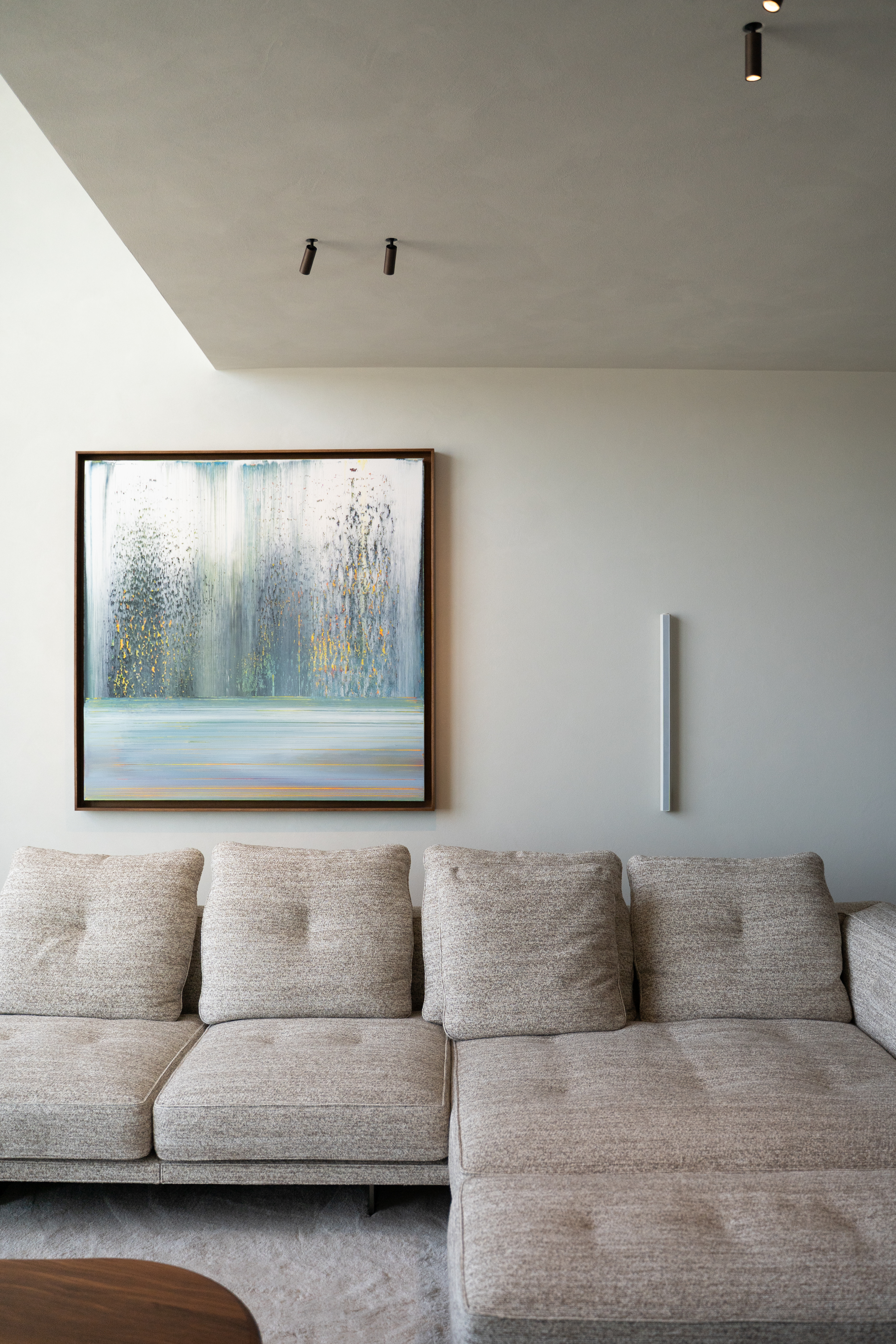
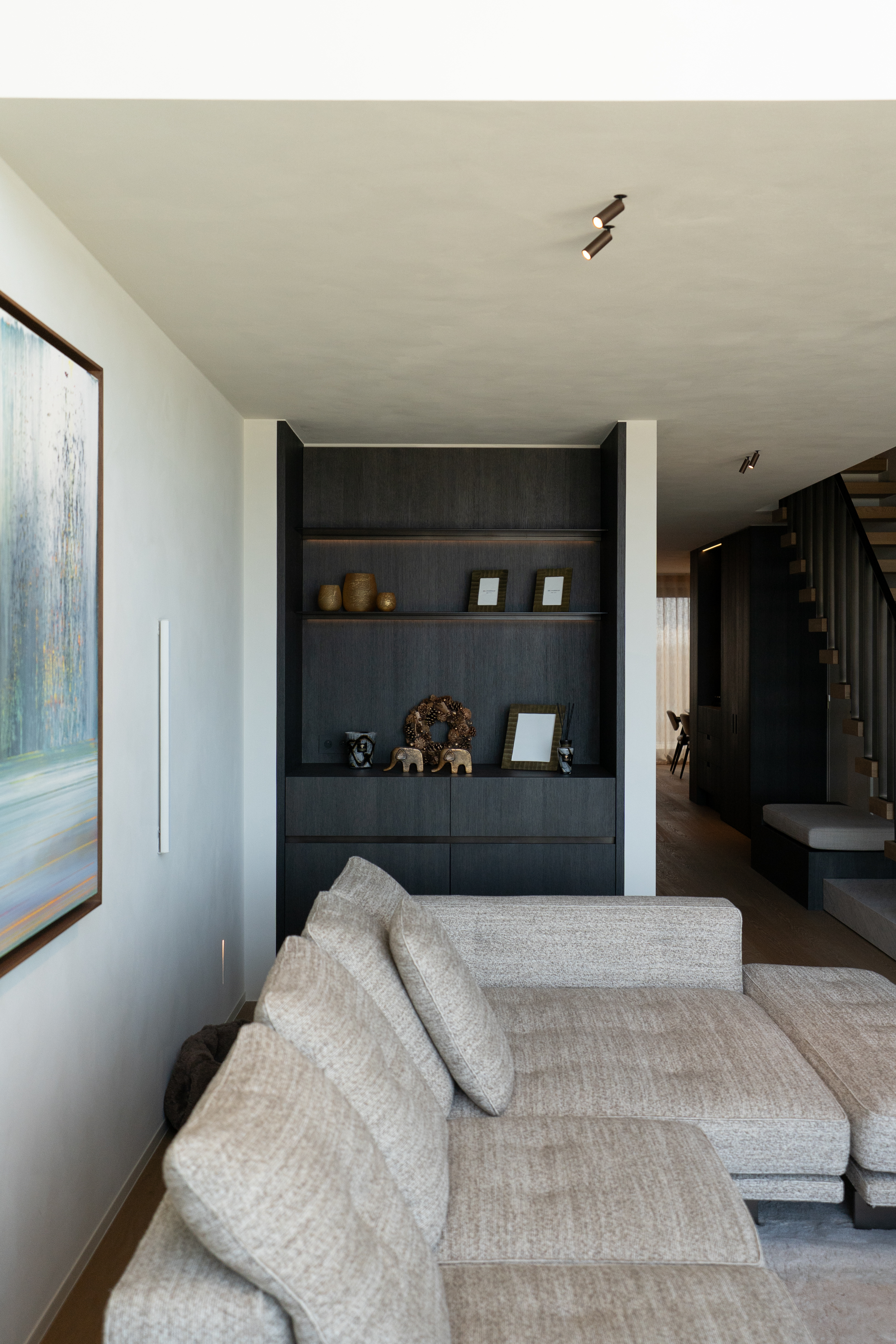
Rather than filling the ceiling evenly with spotlights, we consider which elements of the interior deserve to be highlighted. Artwork can be illuminated with a focused beam, for example, while indirect lighting can softly accentuate a wall or ceiling.
By combining different layers of light, the living room becomes both functional and atmospheric.
Combining different types of lighting
A successful lighting concept usually combines general lighting, accent lighting and ambient lighting.
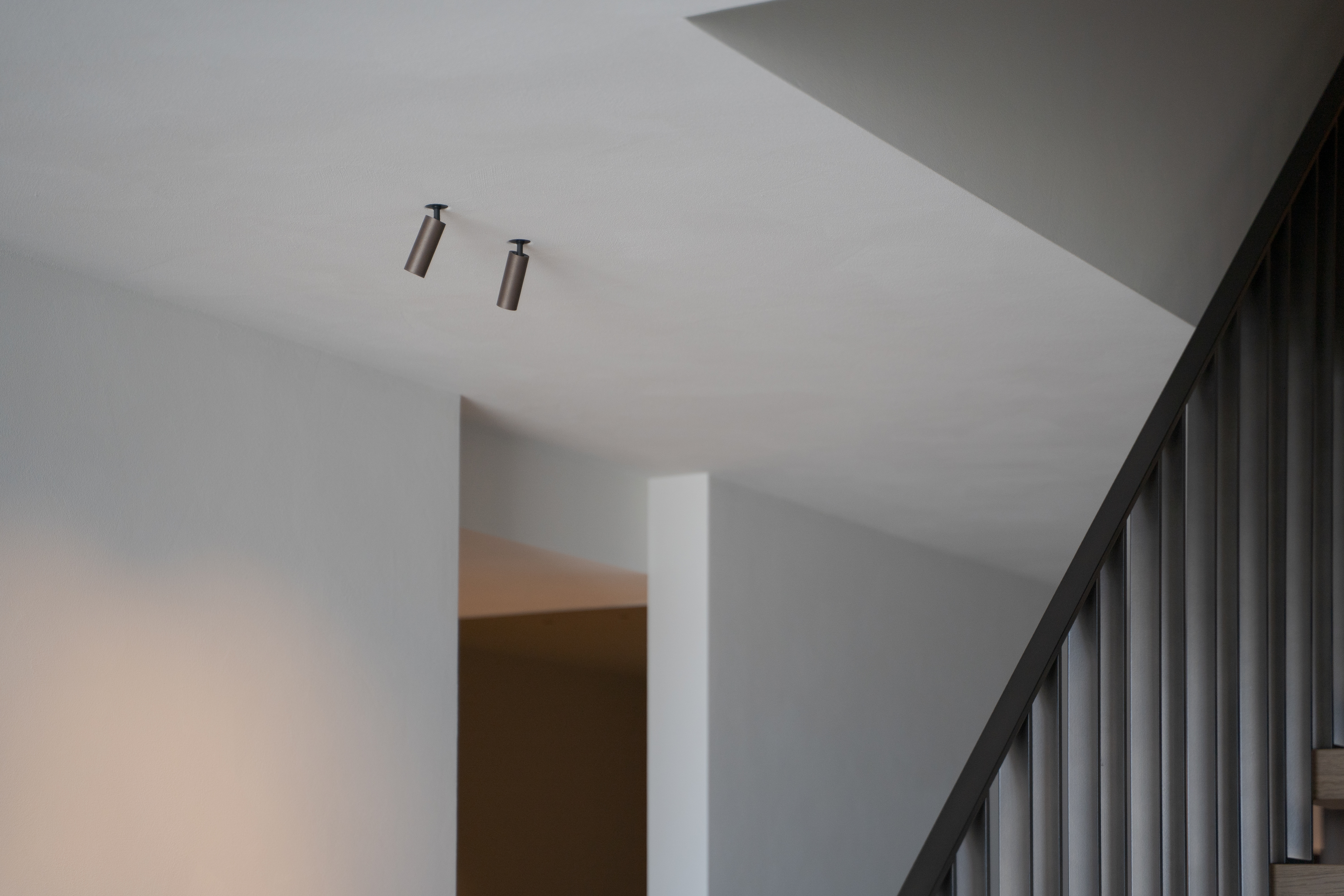
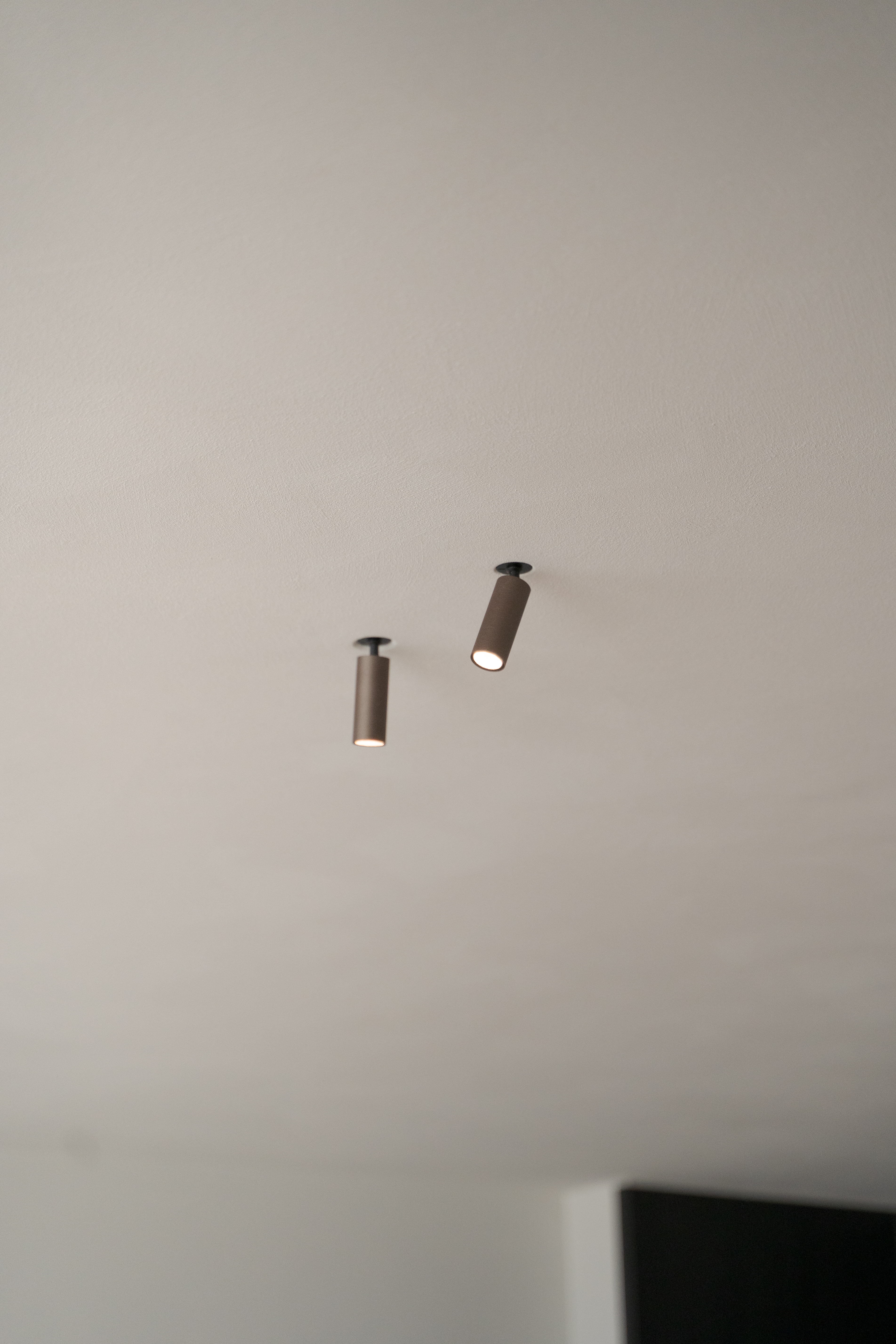
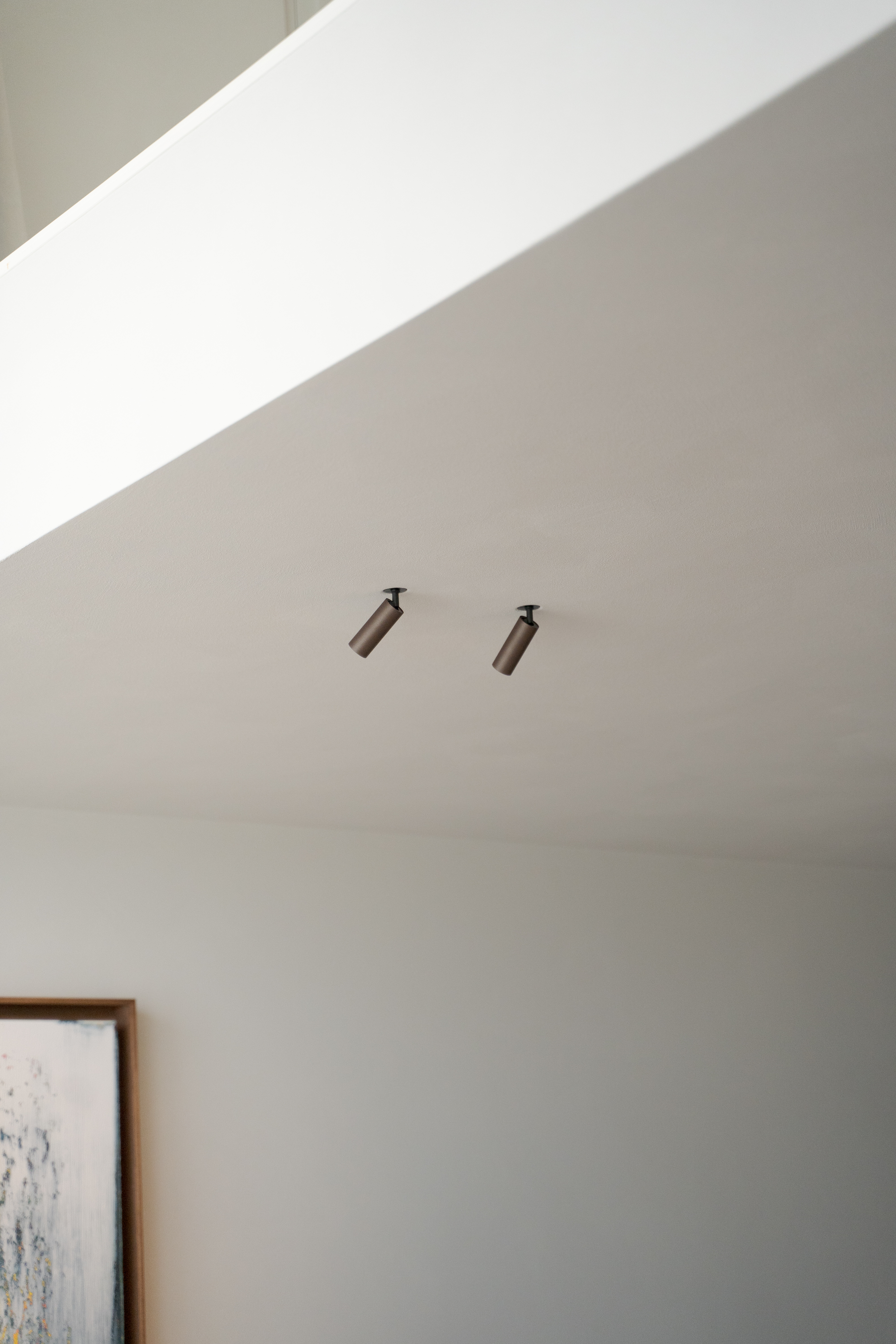
Discreet recessed or surface-mounted spotlights can provide general illumination. Adjustable spotlights can highlight artwork, furniture or architectural details. Indirect lighting adds softness and depth, while a decorative pendant, floor or table lamp can create an additional focal point.
The interaction between these different light sources ultimately determines the atmosphere of the space.
Warm light for a pleasant atmosphere
A warm colour temperature is generally preferred in living spaces. The most suitable light colour depends on factors such as the materials, colours and connection with adjoining rooms.
Light quality is equally important. Luminaires with a high colour rendering index allow wood, natural stone, fabrics, artwork and other materials to appear more natural and vibrant.
Dimmable lighting
A living room is used in different ways throughout the day. It is therefore useful to be able to dim different lighting groups independently.
On a dark winter afternoon, more general lighting may be desirable, while in the evening a few subtle lighting accents are often enough. A carefully designed lighting plan makes it possible to create different lighting moods within the same space.
The right luminaires in the right place
Recessed spotlights, surface-mounted spotlights, wallwashers, pendant lights, indirect lighting and integrated lighting can all have a place in the living room. The ideal combination depends on the architecture and interior design.
The design of a luminaire is not the only consideration. Beam angle, light direction, colour temperature, light intensity and positioning all influence the final result.
Lighting design for your living room
A good lighting plan is therefore not based on a standard number of spotlights per square metre. Every home and every living room is different.
During a professional lighting study, we analyse the plans and layout of the space to determine where lighting is required, which type of light works best and which luminaires are most suitable.
Lighting thus becomes an integral part of the architecture, creating a living room in which light, interior design and atmosphere form one harmonious whole.
Personal lighting advice for every project
Choosing the right lighting is not always easy. That is why we assist both private clients and professionals, including architects, interior designers, installers and property developers, in creating a carefully considered lighting plan.
From selecting the right luminaires and beam angles to dimming systems and technical solutions, we are happy to help bring out the best in every space.
For new-build, renovation and professional lighting projects, we also offer various options for lighting advice and professional lighting planning. This ensures a result that is both functional and atmospheric, perfectly tailored to your architecture.
Curious to discover how we can help? Explore our different lighting advice and lighting planning services or contact us without obligation. We would be happy to discuss your project with you.